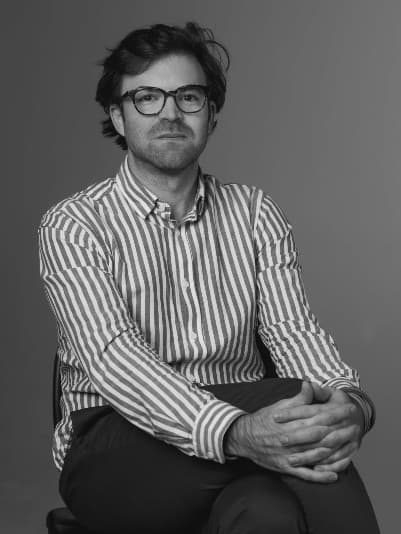
Francisco Martínez is a Ramón y Cajal Senior Research Fellow at the University of Murcia, a Tehcnopolitics of European Democracy Fellow at the Remarque Institute of NYU, and a member of the UCL Anthropology Postgraduate Board of Examiners.
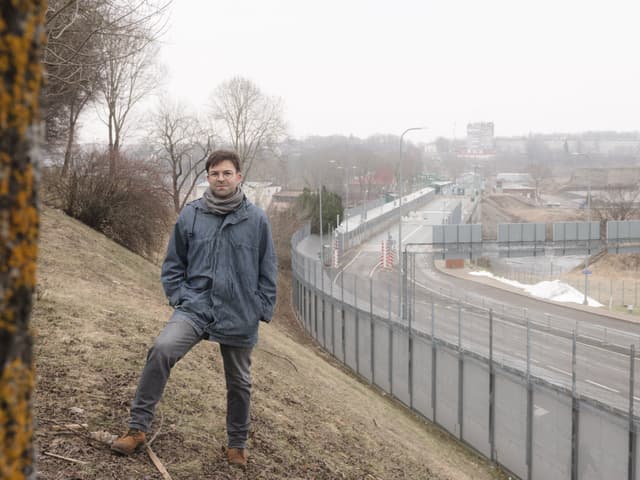
Francisco has spent over sixteen years doing ethnography around the Baltic Sea—presumably because cold places are good for thinking, and because things tend to last longer there, including problems. He pays attention to terrains where Google Maps and ChatGPT start to feel a bit unsure of itself. Places and things most people would rather ignore: basements, caves, holes, tired infrastructures, or that toothbrush brought by your lover to your home.
His work, which earned the Early Career Prize of the European Association of Social Anthropologists, circles around the quiet stubbornness of material life. Because material culture is less about objects than about the negotiations they quietly impose on us.
Martínez is a strong advocate for methodological innovation: he pioneers expanded ethnographies and experimental collaborations, using immersive experiences—like exhibitions—to disrupt conventional notions of memory, materiality, and secrecy, and to convey complex ideas to diverse audiences.
He has published four monographs and a respectable number of articles in journals with serious names, where he shows a distinctive sensibility about how worlds are undone and recombined, and the way repair becomes a form of politics.
As his publications have shown:
- Crises have become a chronic condition that shape how societies are organized, a continuous negotiation within unstable, interconnected systems. Thus, there is a need to approach crises not as endpoints but dynamic material politics with time-depth.
- We do not repair things just because they break, but because we look after them. This insight reframes repair not as a response to breakage but as part of a wider ecology of care.
- The past not only informs the present but interacts dynamically with it, at once mirroring and shaping social practices. Hence, what does not disappear properly makes visible where the mark between the old and the new actually lies.
- The gap between anthropology as a practice and as a discipline is widening; there is a need to expand ethnographic registers with experimental collaborations and multimodal formats. In doing so, we can generate novel configurations of knowledge and widen anthropology’s public relevance.
In addition to curating twelve exhibitions and managing research projects at institutions such as Aalto University and the University of Helsinki, he has coordinated MA programs at the University of Leicester and the Estonian Academy of Arts. Francisco sits in different international boards and has been appointed as reviewer of several research projects and academic awards.
Selected Achievements:
5 single‑authored monographs • 1 novel • 7 edited books • 7 special issues • 35 peer‑reviewed articles • 15 chapters • 12 projects (8 as PI) • 2 PhD supervisions; examiner on 5 theses • Media: 585 articles, 150 TV reports, 50 radio programs • 21 courses taught in 8 different universities.
